A corporate website shouldn’t be a digital brochure that’s hard to update. It’s a meeting point between the company, its customers, potential partners and anyone else who needs to understand what it offers and how to reach it.
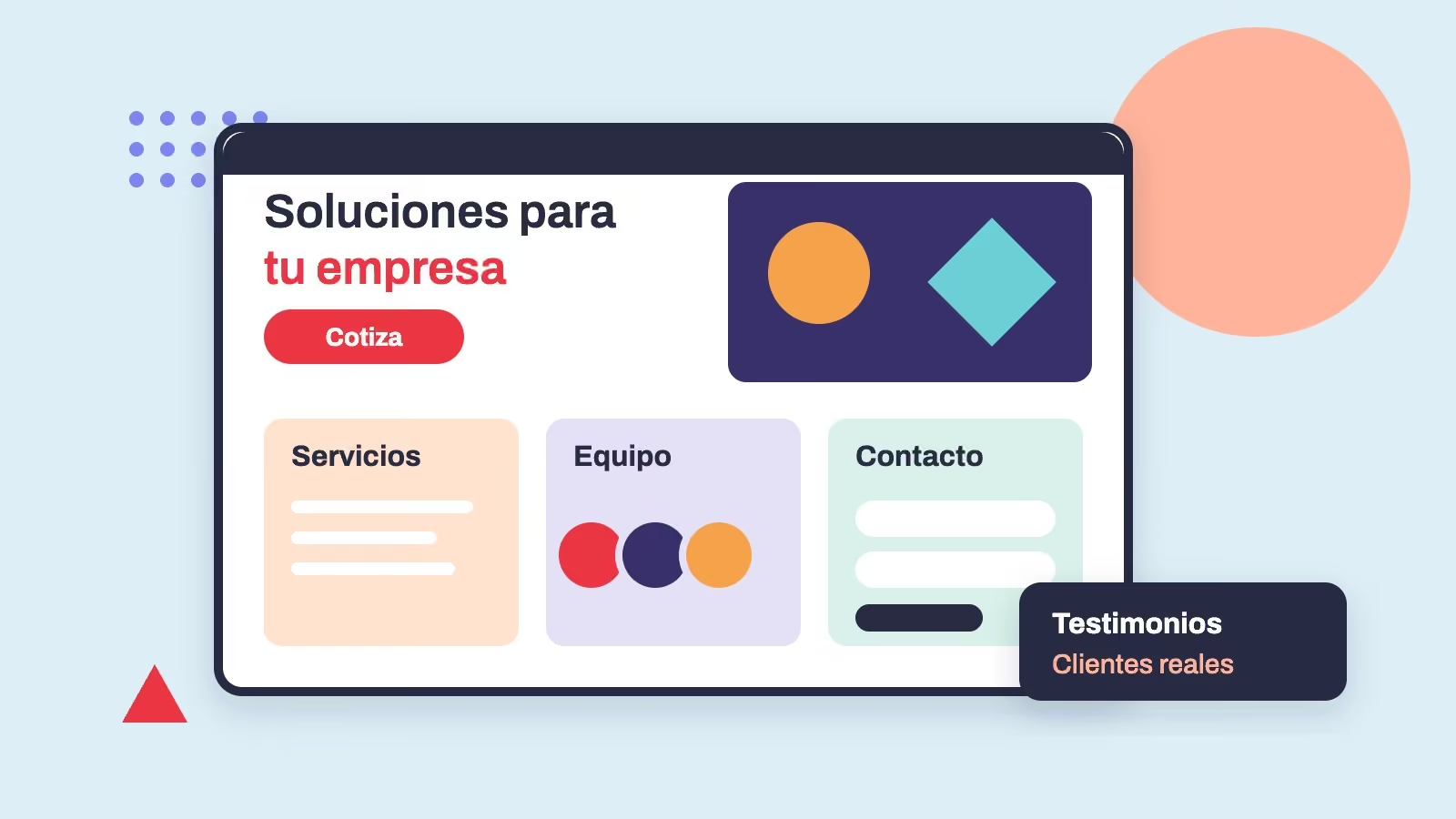
A good corporate website answers three questions quickly: what the organization does, why it can be trusted and what the next step is for the visitor. Design, structure and content have to work together to get there.
1. A value proposition that needs no further explanation
The first section of the homepage should communicate your core service and who it’s for. Avoid headlines that just say “we innovate the future” if visitors can’t tell whether your company works in technology, logistics or consulting.
A more specific example would be “Transportation and logistics solutions for companies with regional operations.” From there, you can expand on real differentiators, coverage and service options.
Clarity up front also helps you organize metadata and headings that are useful for searches by service or need.
2. Services organized around how your customers decide
A list of internal departments doesn’t always match the questions of people looking to hire. Present your services in terms users recognize, with a dedicated page when the topic warrants it.
Each page should answer: what problem it solves, how it works at a high level, what realistic benefits it offers, what requirements apply and how to request information. When the service is complex, an FAQ section can reduce uncertainty.
Companies with multiple business units or countries also need navigation that avoids mixing in messages that are only relevant to one region.
Related serviceWebsitesLearn about the service →3. Proof of experience, without made-up numbers
A professional website gains credibility when it shows authentic projects, clients who have approved being featured, verifiable accreditations, the team behind the work and consistent company information.
Not every company can publish detailed case studies because of confidentiality. Even so, they can describe types of experience, processes or industries served without revealing sensitive information.
The Royale Studios portfolio includes projects for corporations, professional firms, tech companies and many other industries. Evidence should always be described based on the work actually done, never by claiming business results that weren’t measured.
4. A contact path designed with intent
The main button should match the site’s purpose: get a quote, request a consultation, book a meeting or ask for a demo. Not every company needs a shopping cart.
A useful form asks for enough information to respond, but avoids requesting twenty fields on first contact. Explain what will happen after it’s submitted, show clear confirmations and offer alternative ways to get in touch when appropriate.
For B2B companies, it can help to ask about the service category and project type. That information helps route the inquiry to the right team, always in line with privacy and consent rules.
5. Performance, accessibility and security as baseline requirements
The site should work properly on phones, be easy to read, support keyboard navigation and avoid annoying layout shifts. Images need proper compression, and forms should be protected from abuse without blocking legitimate users.
A WordPress platform needs updates, reviews and backups according to its operating plan. Designing without thinking about maintenance can make every future change more expensive.
6. Analytics that measure what matters
Total visits are an incomplete signal. For a service business, it’s usually more useful to measure form submissions, contact clicks, document downloads or meeting requests.
Google Analytics 4, Google Tag Manager and ad platforms can be set up in a coordinated way; it’s important to define events and avoid duplicate conversions. Privacy and consent should also be considered in the setup.
Not every metric goes up just because you have a new website. The site should be planned around goals, with results reviewed to decide on improvements.
7. Content ready for search engines and new AI-powered search
A company needs to explain its services with specific names, publish consistent information about its specialties and answer the questions its market frequently asks. Technical SEO fundamentals and a useful editorial structure create a stronger foundation for both traditional search and AI experiences.
This doesn’t mean guaranteeing mentions in AI assistants; it means improving the site’s ability to represent the company accurately.
The corporate website that works best isn’t necessarily the one with the most animations: it’s the one that lets people understand and trust the business with the least friction.
Does your website answer these questions?
Ask someone outside your company to look at your homepage for one minute. Can they explain what you sell? Do they find a clear way to contact you? Do they notice information that backs up your experience? If the answer is no, there’s probably room to improve your content or user experience.
At Royale, we offer web design and development and UI/UX services to build solutions tailored to each type of organization, not one-size-fits-all messaging templates.